Snailpocalypse: A Physical Escape Room Game for Students Fostering Data Visualisation Literacy
Jump to Discussion
Links
Sign in to access the Paper PDF.
Abstract
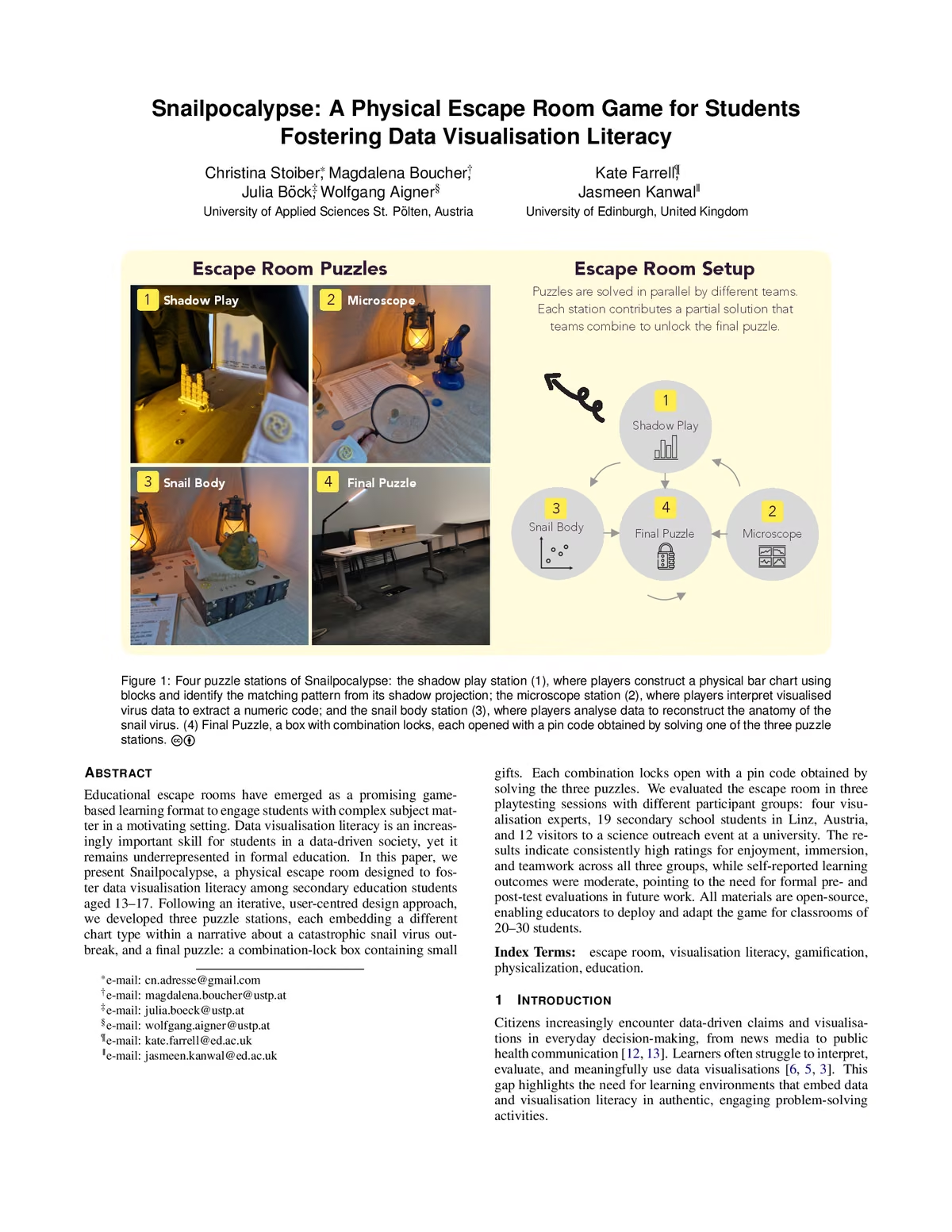
Educational escape rooms have emerged as a promising game-based learning format to engage students with complex subject matter in a motivating setting. Data visualisation literacy is an increasingly important skill for students in a data-driven society, yet it remains underrepresented in formal education. In this paper, we present Snailpocalypse, a physical escape room designed to foster data visualisation literacy among secondary education students aged 13–17. Following an iterative, user-centred design approach, we developed three puzzle stations, each embedding a different chart type within a narrative about a catastrophic snail virus outbreak, and a final puzzle: a combination-lock box containing small gifts. Each combination locks open with a pin code obtained by solving the three puzzles. We evaluated the escape room in three playtesting sessions with different participant groups: four visualisation experts, 19 secondary school students in Linz, Austria, and 12 visitors to a science outreach event at a university. The results indicate consistently high ratings for enjoyment, immersion, and teamwork across all three groups, while self-reported learning outcomes were moderate, pointing to the need for formal pre- and post-test evaluations in future work. All materials are open-source, enabling educators to deploy and adapt the game for classrooms of 20–30 students.